CIBIL Enquiry: Hard vs Soft Enquiry and Your Credit Score
Why your own check is harmless, why five loan applications in a month aren't, and what to do instead.

A CIBIL enquiry is a record that someone pulled your credit report. A hard enquiry happens when a lender checks you because you applied for a loan or card; it's visible to other lenders and can lower your score a little for a while. A soft enquiry, like checking your own score, never affects it.
Key TakeawaysChecking your own score is a soft enquiry. Check as often as you like.Each loan or card application adds a hard enquiry, even if you're rejected.Several hard enquiries close together can make you look "credit hungry".Bureaus must alert you by SMS or email when a lender accesses your report (RBI).
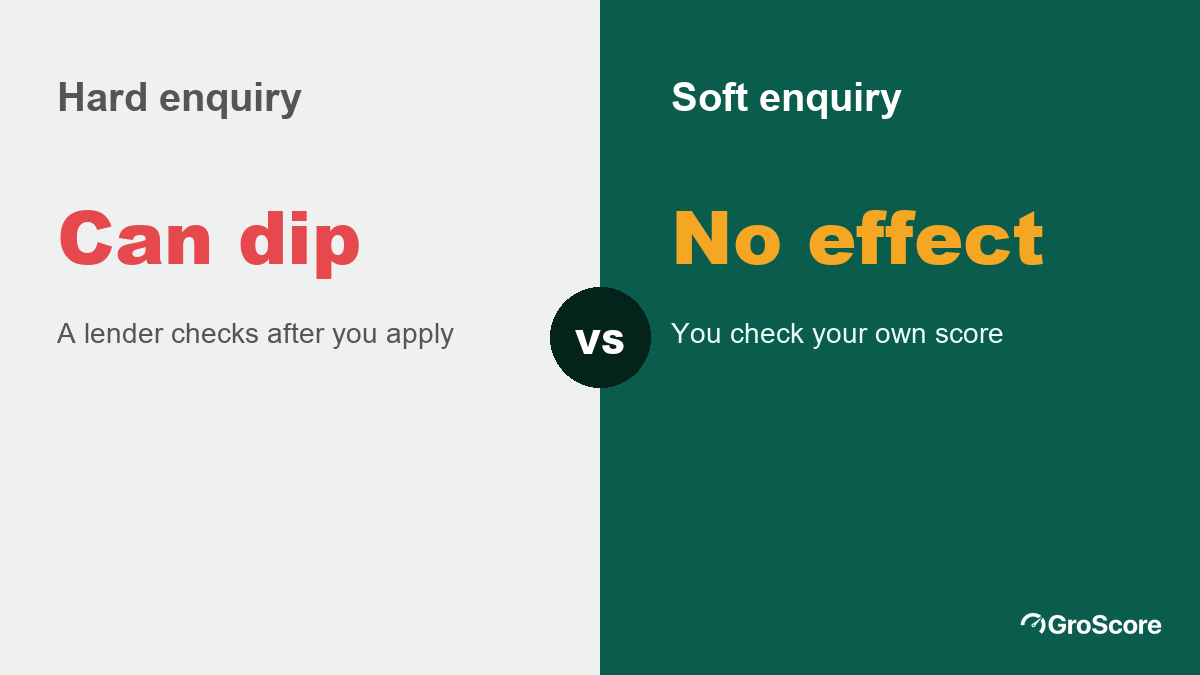
Same report, two very different kinds of check.
What Is a CIBIL Enquiry?
Every time your credit report is pulled, the bureau logs it. Those logs are called enquiries (or "inquiries", in US spelling). On a TransUnion CIBIL report, they sit in the enquiry section at the end: which lender pulled the report, on what date, for what purpose and, often, for how much.
CIBIL is only one of four credit bureaus registered with the RBI, according to the RBI's list of credit information companies. Equifax, Experian and CRIF High Mark log enquiries too, so a "CIBIL enquiry" is really a credit enquiry at whichever bureau the lender used.
Enquiries are one of the five things that shape your score, alongside payment history, card utilisation, credit age and credit mix. The guide to credit score factors explains how they fit together. Enquiries usually carry less weight than payment history. They still matter when they pile up.
Hard vs Soft Enquiry: What's the Difference?
The difference is who's asking and why.
| Soft enquiry | Hard enquiry | |
|---|---|---|
| Who checks | You, or an app with your consent | A lender, after you apply |
| Affects your score? | No | Can lower it a little, for a while |
| Shows to lenders? | No | Yes, on your report |
| Can it be removed? | Nothing to remove | Only if it's an error |
A soft enquiry is a look at your report that isn't tied to a credit application. Checking your own score is the classic one. Your existing lender reviewing your account is usually treated the same way.
A hard enquiry is a lender pulling your report because you asked it for credit. A personal loan application, a credit card application, a home loan: each one leaves a hard enquiry.

Does Checking My Own Credit Score Reduce It?
No. Never. A self-check is a soft enquiry, and soft enquiries don't count in your score.
People still worry about this, so let's be blunt: you could check your score every day and it wouldn't move because of it. The fear keeps people from looking at their report at all, which is the bigger risk. Mistakes go unnoticed. Fraud goes unnoticed.
GroScore is a free credit score app and personal credit coach from Vitrak Technologies (GroMo). It shows your Equifax credit score and full report with a soft check that never affects your score, explains in Hindi or English what is holding the score back, and gives a step-by-step plan to fix it. GroScore is not a lender, and the score it shows is your Equifax score, not a CIBIL score. For other ways to see your number, including the free annual report from each bureau, see the CIBIL score check guide.
What Counts as a Hard Enquiry?
Most people know a loan application counts. Fewer realise how many everyday actions do too.
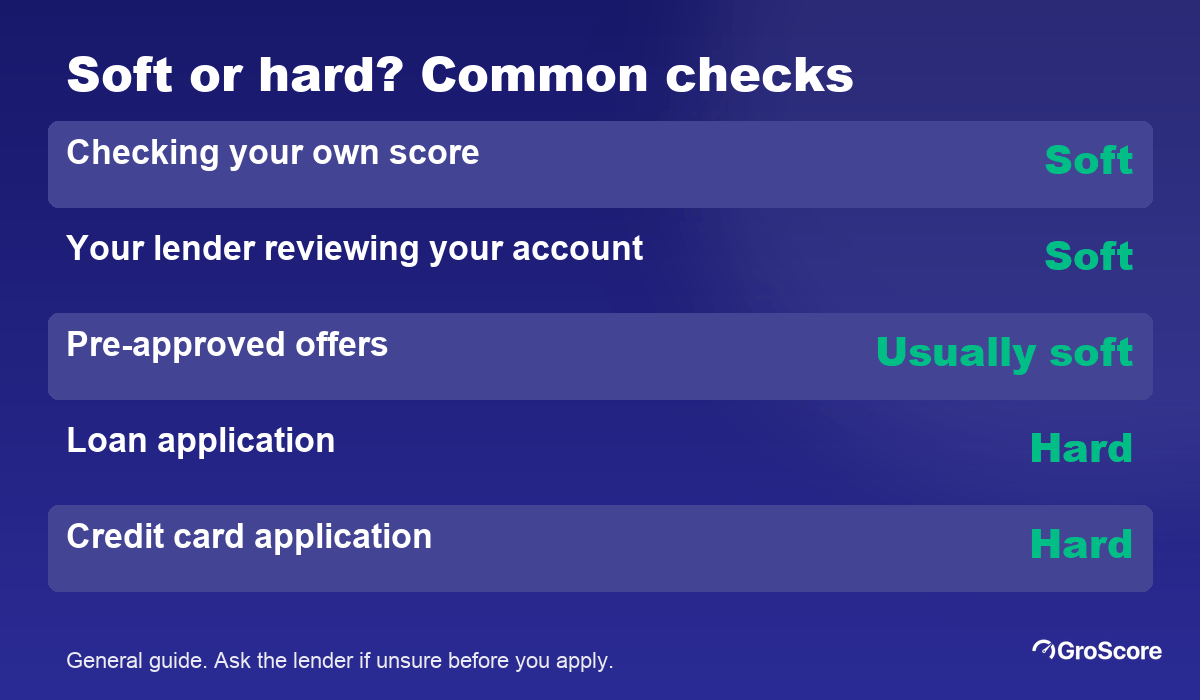
Applications leave hard enquiries. Self-checks and reviews usually don't.
Usually a hard enquiry:
- applying for a personal loan, home loan, car loan or gold loan
- applying for a credit card, including "lifetime free" cards
- consumer durable loans and many buy now, pay later plans at checkout
- asking your bank for a higher card limit, in some cases (ask first)
Usually a soft enquiry:
- checking your own score, on a bureau site or an app
- your current lender reviewing your account
- pre-approved offers a lender sends you before you apply
The line isn't always obvious at the point of sale. A store's "instant EMI approval" is a credit application. If you're unsure, ask the lender directly whether it will run a hard check. The same goes for a credit limit increase on a card you already hold.
How Many Hard Enquiries Are Too Many?
There's no published cut-off. Bureaus don't share their formulas, and every lender reads enquiries in its own way. What matters is the pattern.
Two or three applications spread over a year look like normal life: a card here, a car loan there. Five or six in a few weeks look like someone who keeps getting turned down and keeps trying. Lenders call that credit hungry, and it can make the next lender more cautious even if your score is decent.
Here's an illustrative example of how it snowballs.
Rahul, 27, applies for a personal loan and is rejected. Worried, he applies to five more lenders over the next three weeks. That's six hard enquiries in under a month. Each new lender sees the five before it, and several of them say no too.
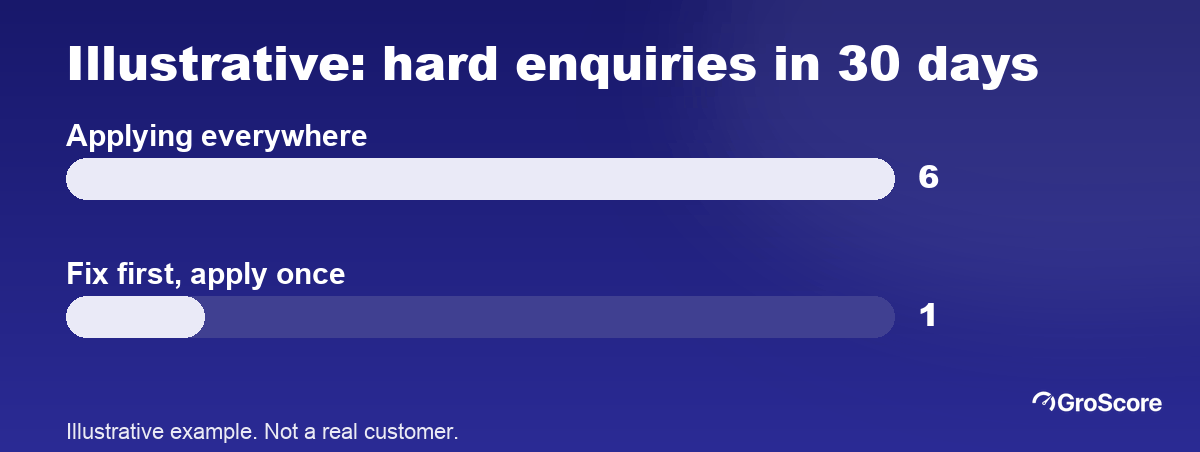
Illustrative example: applying everywhere versus applying once, prepared.
What should he have done? Arjun, GroScore's credit coach, would have flagged three things first:
- Find out why. A rejection usually has a reason: a late payment, high card utilisation, a wrong entry on the report. Our guide to a loan rejected due to low CIBIL walks through the next steps.
- Check the report, not just the score. A loan that isn't his, or a closed card still showing a balance, is an error he can dispute.
- Apply once, to the lender that fits. After fixing what he can, one well-chosen application beats six hopeful ones.
Two common culprits are fixable. One is card use above 30% of the limit, which GroScore suggests avoiding. The other is a report error, which GroScore says turns up on about 1 in 5 reports (groscore.in, retrieved 2026-10-05).
Six enquiries won't wreck a strong profile on their own. But on a thin or shaky file, they're one more reason for a lender to hesitate. Lenders decide; a score is one input among income, existing EMIs and your job. Late EMIs usually cost more than an extra enquiry, as our guide on how late payments affect your credit score shows.
How Long Do Hard Enquiries Stay on Your CIBIL Report?
An enquiry stays listed on your report for a while after it's made. Many lender guides put that at around two years, but bureaus don't publish exactly how long an enquiry keeps counting in the score, and its weight fades as it ages. Read the dates in your own report's enquiry section; that's the only timeline that matters for you.
Can you remove one? Only if it's wrong. A hard enquiry from a lender you genuinely applied to is accurate, and nobody can delete it early. An enquiry from a lender you never approached is a different matter. It could be an error, or someone applying in your name, and it's worth disputing with the bureau. Under the RBI's credit information rules (2025), bureaus must send you an SMS or email when a lender accesses your report, wherever they have your contact details. If an alert arrives and you didn't apply for anything, open your report that day.
The guide to reading your CIBIL report shows where the enquiry section sits and what each column means.
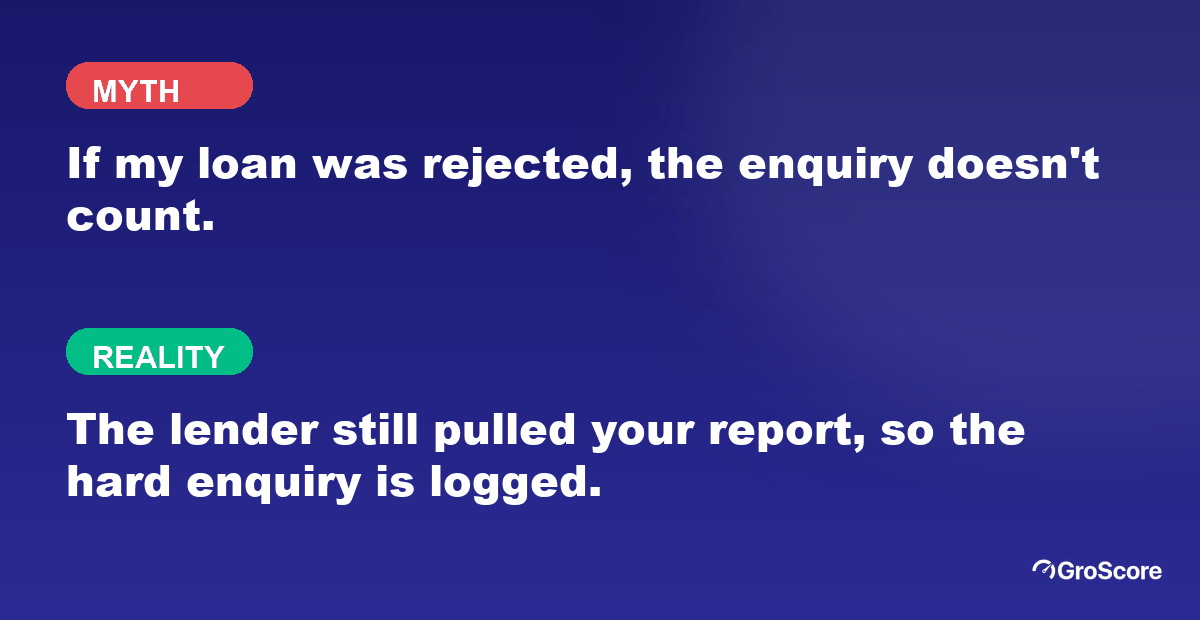
Approved or rejected, the lender still pulled your report.
How to Keep Enquiries From Hurting Your Score
- Check your own score first. It's free and soft. Know where you stand before a lender looks.
- Space out applications. Give each one a few months where you can.
- Don't apply everywhere after a rejection. Fix the reason first.
- Ask before you click "apply". Find out whether an eligibility check is soft or hard.
- Watch your alerts. An enquiry you don't recognise is your earliest fraud warning.
GroScore alerts you to new enquiries on your Equifax report, along with report errors and overdue payments (groscore.in). It can't remove accurate enquiries, and it doesn't approve loans. It can show you which lenders your profile clears before you apply, so you can make one considered application instead of five. For the bigger picture, see how to improve your credit score.
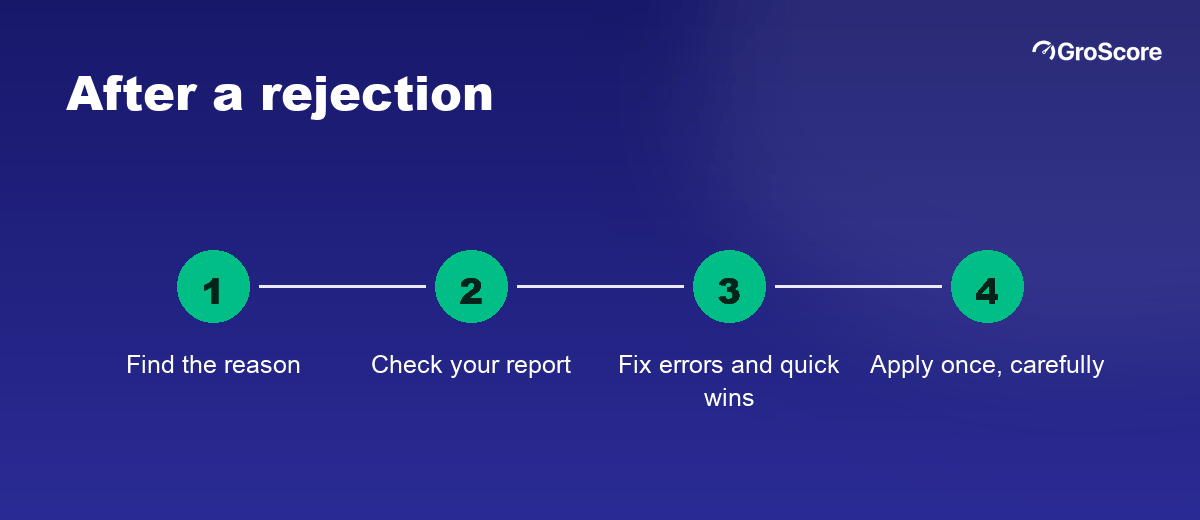
What to do after a rejection, before the next application.
Frequently Asked Questions
Does checking my own credit score reduce it?
No. Checking your own score is a soft enquiry, and soft enquiries never affect your score, however often you check.
What is the difference between a hard and soft enquiry?
A hard enquiry happens when a lender pulls your report because you applied for credit; other lenders can see it and it can lower your score a little for a while. A soft enquiry, like a self-check, is not shown to lenders and has no effect.
How many hard enquiries are too many?
There's no fixed number. A few spread across a year is normal. Several in a few weeks can make you look credit hungry, especially if your profile is thin or you've just been rejected.
How long do hard enquiries stay on my CIBIL report?
Hard enquiries stay listed for a while, often cited as about two years, but their effect fades as they age. Bureaus don't publish an exact rule, so check the dates on your own report.
Does applying for a credit card lower my score?
The application adds a hard enquiry, which can lower your score slightly for a while. One application rarely matters much. Several in a short time can.
Does a rejected loan application still count as an enquiry?
Yes. The lender pulled your report to decide, so the hard enquiry is logged whether you were approved or not. That's why applying everywhere after a rejection tends to backfire.
The Bottom Line
A CIBIL enquiry is just a log of who looked at your report. Your own looks are free and harmless. Lenders' looks, triggered by your applications, count, and they count most when they bunch up. Check your report before you apply, fix what's wrong, and then apply once, carefully. Applying for a card? Check the minimum CIBIL score for a credit card before you hit apply.
Disclaimer
This GroScore article is for general education and is not financial advice. GroScore provides credit scores and reports sourced from Equifax, an RBI-licensed credit bureau; scores differ between bureaus and change as lenders report new data. Credit score improvement depends on your individual credit behaviour and bureau reporting timelines, and results are not guaranteed. Loan and card decisions are made by lenders on their own criteria. GroScore is not a lender. Figures and rates shown are indicative.
